Expanding your Dutch SME’s digital reach often reveals just how different the German market can be. For digital marketing managers, aligning your SEO strategy with German search habits is no small task. You need more than simple translation to succeed. This guide will walk you through the technical and strategic steps of defining international SEO targets for Germany so you can make data-driven decisions and achieve measurable visibility gains.
Table of Contents
- Step 1: Define International Seo Targets For Germany
- Step 2: Configure Tracking Tools For Multilingual Sites
- Step 3: Set Up Geo-Targeted Keyword Monitoring
- Step 4: Integrate Analytics For Localised Performance
- Step 5: Verify Data Accuracy And Reporting Flows
Quick Summary
| Key Point | Explanation |
|---|---|
| 1. Define clear SEO targets | Establish technical infrastructure aligned with market objectives to build a strong digital presence in Germany. |
| 2. Implement multilingual tracking | Use analytics tools to accurately track user behaviour across different language versions, ensuring granular insights. |
| 3. Conduct geo-targeted keyword research | Monitor local keywords to understand search behaviours, capturing insights specific to different German regions. |
| 4. Integrate comprehensive analytics | Capture and analyse detailed performance metrics for localised marketing strategies across various digital platforms. |
| 5. Verify data accuracy regularly | Implement systematic processes to ensure data integrity and reliable insights for informed decision-making. |
Step 1: Define international SEO targets for Germany
Defining precise international SEO targets for the German market requires a strategic approach that considers technical infrastructure and regional user behaviour. This step establishes the foundational framework for your German digital presence by aligning your website’s technical configuration with specific market objectives.
To successfully target the German market, you’ll need to implement several critical technical and content strategies. Start by carefully structuring your website’s international configuration using recommended approaches like country-specific URL strategies. These strategies involve choosing between country-code top-level domains (ccTLDs) like .de, subdomains, or subdirectories that clearly signal your regional focus.
Key elements for defining your German SEO targets include:
- Precise geotargeting through technical infrastructure
- Implementing hreflang tags for language/region signalling
- Creating locally relevant content matching German user intent
- Establishing clear keyword research specific to German markets
Your SEO configuration should also incorporate comprehensive localization planning, which goes beyond mere translation. This means adapting your content, metadata, and technical structure to resonate authentically with German digital audiences.
Here’s a comparison of common international SEO website structures for targeting the German market:
| Structure Type | SEO Benefit | Technical Complexity |
|---|---|---|
| ccTLD (e.g., .de) | Strong regional authority | Separate site management |
| Subdomain (de.site.com) | Independent SEO signals | Moderate configuration |
| Subdirectory (/de/) | Shared domain authority | Simplest setup |
Technical precision in international SEO isn’t just recommended—it’s essential for market penetration.
Pro tip: Invest in native German linguistic and cultural expertise to ensure your SEO strategy genuinely connects with your target audience.
Step 2: Configure tracking tools for multilingual sites
Configuring tracking tools for multilingual websites demands precision and strategic technical implementation. This crucial step ensures you can accurately analyse user behaviour across different language versions of your German-targeted digital presence.

Begin by selecting analytics platforms that support comprehensive multilingual tracking capabilities. These tools must distinguish between language variants, enabling granular insights into user interactions specific to German-language pages. Key configuration requirements include setting up separate tracking profiles for each language version and implementing consistent URL structures that allow clear performance segmentation.
Essential tracking configuration elements include:
- Language-specific tracking codes
- Hreflang tag integration
- Customised goal tracking for German market segments
- Cross-language conversion monitoring
Your tracking setup should incorporate multilingual SEO measurement techniques that provide nuanced performance data. This means configuring tools to recognise language switching, tracking user journeys across different linguistic versions, and establishing metrics that reflect genuine engagement.
Below is a summary of analytics tools suitable for multilingual SEO tracking and their key features:
| Tool Name | Language Variant Support | Segmentation Abilities | Ideal Use Case |
|---|---|---|---|
| Google Analytics 4 | Yes | Advanced segment creation | Detailed user behaviour analysis |
| Matomo | Yes | Custom goal tracking | Privacy-focused companies |
| Adobe Analytics | Yes | Deep cross-language insights | Large-scale enterprise needs |
Accurate multilingual tracking transforms raw data into strategic market intelligence.
Pro tip: Configure separate conversion goals for each language version to capture genuine market-specific performance variations.
Step 3: Set up geo-targeted keyword monitoring
Setting up geo-targeted keyword monitoring for the German market requires sophisticated analysis and strategic tracking techniques. This crucial step will help you understand search behaviours specific to German users and optimise your digital marketing approach.
Begin by implementing advanced semantic keyword analysis that captures nuanced local search intent. This involves using tools capable of distinguishing between geographic variations in keyword performance, especially critical for understanding regional differences within Germany. Your monitoring approach should leverage technologies that can track keyword rankings across different German regions, cities, and language dialects.
Key elements of effective geo-targeted keyword monitoring include:
- Localised keyword research for German markets
- Regional search intent tracking
- Language variant performance analysis
- Competitive keyword benchmarking
Your monitoring strategy should incorporate precise geographic keyword techniques that provide granular insights into search behaviours. This means configuring your tracking tools to capture location-specific search patterns, understanding regional linguistic nuances, and identifying emerging keyword trends across different German market segments.
Effective geo-targeting transforms keyword data into actionable market intelligence.
Pro tip: Regularly update your keyword monitoring tools to capture emerging local search trends and semantic variations in German search language.
Step 4: Integrate analytics for localised performance
Integrating analytics for localised performance requires a strategic approach to capturing nuanced German market insights. This critical step transforms raw data into meaningful performance measurements that drive targeted digital marketing strategies.
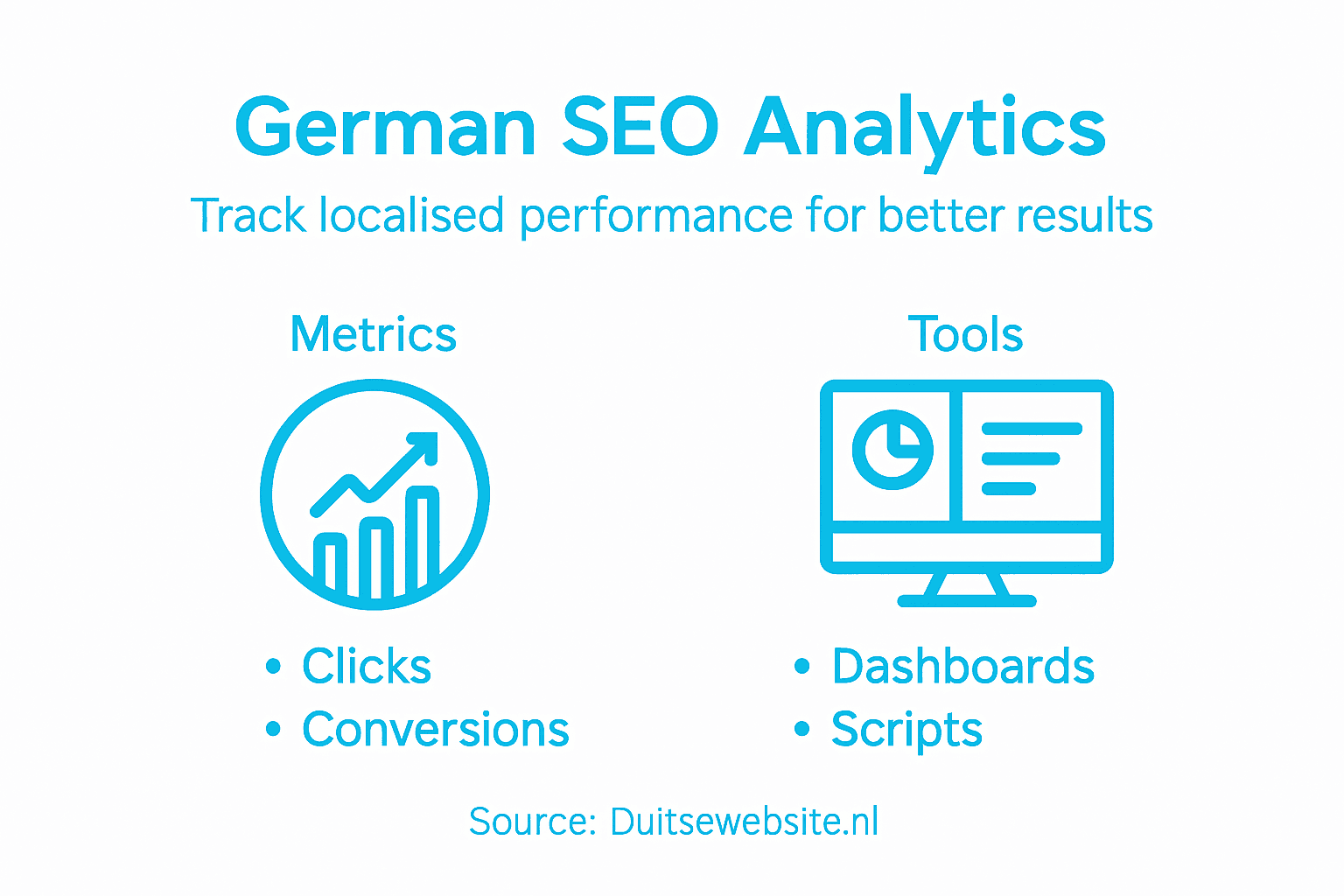
Begin by implementing robust data integration architectures designed to capture granular user behaviour across German digital platforms. These advanced integration pipelines enable you to consolidate performance metrics from multiple sources, providing a comprehensive view of your localised marketing efforts.
Key components of effective analytics integration include:
- Unified data collection across platforms
- Real-time performance tracking
- Segmented user behaviour analysis
- Localised conversion metric monitoring
Your integration strategy should leverage comprehensive digital performance technologies that capture detailed insights into German user interactions. This involves configuring your analytics tools to distinguish between regional variations, language preferences, and specific market segment behaviours, ensuring your data provides actionable intelligence for targeted marketing optimisation.
Intelligent analytics integration transforms data points into strategic market understanding.
Pro tip: Develop custom dashboards that prioritise German-specific performance metrics to streamline your localised analytics interpretation.
Step 5: Verify data accuracy and reporting flows
Verifying data accuracy and reporting flows is crucial for maintaining reliable international SEO tracking in the German market. This meticulous process ensures your analytics provide trustworthy insights that drive strategic decision-making.
Begin by implementing comprehensive data quality validation techniques that systematically check for inconsistencies and errors. These validation processes involve cross-referencing data points, establishing automated quality checks, and creating robust verification mechanisms that detect potential reporting discrepancies specific to German market tracking.
Key elements of effective data verification include:
- Automated data validation protocols
- Cross-reference multiple data sources
- Regular integrity audits
- Standardised error reporting mechanisms
Your verification strategy should incorporate rigorous documentation practices that create transparent, attributable tracking systems. This means developing clear audit trails, implementing consistent reporting standards, and establishing documented processes that allow for precise tracking and reproducible analysis of your German SEO performance metrics.
Meticulous data verification transforms raw information into reliable strategic intelligence.
Pro tip: Implement automated data validation scripts that run daily to catch potential tracking inconsistencies before they impact your reporting.
Boost Your German Market Success with Expert International SEO Tracking
Navigating the complexities of international SEO tracking for the German market requires technical precision and deep local insight. Many businesses struggle to implement effective geotargeting, configure accurate multilingual tracking, and monitor geo-specific keywords that truly reflect regional user intent. Without these crucial strategies, companies risk missing out on valuable German traffic and conversions.
At Duitsewebsite.nl, we specialise in delivering tailored SEO solutions built on 17+ years of native German expertise. Our comprehensive approach includes setting up precise hreflang tags, implementing multilingual tracking configurations, and executing advanced keyword monitoring so your digital presence resonates authentically with German audiences. We transform complex international SEO challenges into measurable growth opportunities through real data and localisation strategies designed for your success.
Ready to conquer the German market with confidence and clarity? Discover how our full-service digital marketing solutions can optimise your international SEO tracking and elevate your brand visibility in Germany. Visit us at Duitsewebsite.nl and take the next step towards sustained German market growth today.
Frequently Asked Questions
How do I configure hreflang tags for my German site?
To configure hreflang tags, ensure you include relevant tags in the header of each webpage. This will properly signal language and regional targeting, helping search engines provide the correct version to users.
What should I include in my geo-targeted keyword strategy for the German market?
Include localised keywords that resonate with German search behaviour and regional dialects. Conduct thorough keyword research to identify specific terms and phrases that potential customers are using to find services or products.
How can I track user behaviour on my multilingual website?
Track user behaviour on a multilingual website by setting up separate tracking profiles for each language version. Make sure to implement custom tracking codes that correspond to each version to gain deep insights into user interactions specific to the German audience.
What performance metrics should I monitor for my German SEO efforts?
Monitor metrics such as click-through rates, conversion rates, and user engagement specifically for German-language pages. Establish clear and specific goals for each metric to evaluate the effectiveness of your localisation strategies, aiming for improvements of 10-30% within the first few months.
How do I ensure the accuracy of my SEO tracking data for the German market?
Ensure data accuracy by implementing automated validation protocols and performing regular integrity audits. Create robust systems for cross-referencing data from multiple sources to detect inconsistencies in your tracking information.