Archiefartikel · oorspronkelijk gepubliceerd op 2026-02-16. Informatie en verwijzingen kunnen inmiddels gewijzigd zijn.
Breaking into the German digital market is never as simple as switching your site to German and waiting for sales to grow. Success for Dutch e-commerce brands depends on mastering international SEO that adapts not just language but also technical details, local search habits, and legal rules unique to Germany. This guide helps you understand the most important SEO strategies for attracting German customers and improving your visibility on Google.de.
Table of Contents
- International SEO Defined for German Markets
- Tailoring SEO To Dutch-German Expansion
- Technical Optimisation Across Borders
- Content Localisation and German User Intent
- Legal, Compliance, and Marketplace Risks
Key Takeaways
| Point | Details |
|---|---|
| International SEO is essential for German market entry | Dutch businesses must tailor their SEO strategies to meet specific linguistic and cultural requirements of the German digital landscape. |
| Content localisation requires depth and expertise | Generating authoritative, detailed content is crucial to resonate with German users and enhance search visibility. |
| Technical SEO is vital for effective cross-border operations | Implementing advanced localisation techniques, such as hreflang tags and region-specific site architecture, is essential for ranking success in Germany. |
| Compliance with legal and data protection standards is mandatory | Adhering to GDPR and understanding local regulations will safeguard businesses and enhance credibility in the German market. |
International SEO Defined for German Markets
International Search Engine Optimisation (SEO) represents a strategic approach enabling Dutch businesses to effectively penetrate and compete within the German digital marketplace. At its core, international SEO focuses on adapting website content, technical infrastructure, and marketing strategies to align with specific regional search engine requirements and user behaviours.
For German markets, SEO involves several nuanced considerations that go beyond simple translation. Search engine optimisation practices require comprehensive understanding of linguistic, technical, and cultural factors unique to the German digital landscape. These include:
- Precise German language keyword research
- Understanding German search engine algorithmic preferences
- Technical website localisation for German user experience
- Region-specific content development
- Compliance with German data protection regulations
Successful international SEO demands a multifaceted strategy that transcends basic content translation. German search users exhibit distinct online behaviours, preferring detailed, authoritative content that demonstrates profound subject expertise. Technical aspects like website loading speed, mobile responsiveness, and structured data markup become critical ranking factors in German search results.
Modern German SEO integrates sophisticated algorithmic adaptations that prioritise user intent and content relevance. Businesses must develop content that not only includes relevant keywords but also provides genuine value to the German target audience. This means creating in-depth, professionally written materials that address specific user questions and demonstrate domain expertise.
Pro tip: Invest in native German content creation and conduct thorough localised keyword research to maximise your international SEO effectiveness in the German market.
Tailoring SEO To Dutch-German Expansion
Expanding into the German market requires Dutch businesses to develop a sophisticated, nuanced approach to international search engine optimisation. The proximity between the Netherlands and Germany offers unique opportunities for cross-border digital marketing, but demands meticulous strategic planning to navigate linguistic and cultural differences effectively.
Cross-border digital collaboration represents a critical component of successful SEO expansion. This approach involves several key strategic considerations:
- Developing bilingual content strategies
- Implementing region-specific keyword research
- Understanding technical SEO requirements for multinational websites
- Creating culturally resonant marketing messaging
- Complying with regional data protection regulations
Technical SEO elements play a pivotal role in successful market expansion. Dutch businesses must carefully implement sophisticated techniques like hreflang tags, which signal language and regional targeting to search engines. This ensures that search algorithms correctly interpret and display content for German users, improving overall search visibility and user experience.
Understanding the nuanced differences between Dutch and German digital landscapes is paramount. While both markets share geographic proximity, they exhibit distinct search behaviours, user preferences, and content consumption patterns. Successful SEO strategies must therefore go beyond simple translation, focusing instead on deep cultural localisation and genuine value creation for the target audience.

Here’s a summary of key differences between Dutch and German SEO market expansion factors:
| Factor | Dutch Market Approach | German Market Approach |
|---|---|---|
| Keyword Strategies | Focus on Dutch language, broad queries | Precise German keywords, detail-driven |
| Content Expectations | Direct, concise messaging | In-depth, authoritative materials |
| Technical SEO | Standard, less localisation | Advanced localisation, hreflang usage |
| Legal Compliance | Dutch regulations, EU laws | Strict EU & German standards |
| User Behaviour | Quick info consumption | Comprehensive research and expertise |
Pro tip: Invest in native German content creation and conduct comprehensive linguistic and technical SEO audits to ensure seamless market penetration and search engine performance.
Technical Optimisation Across Borders
Technical search engine optimisation represents the critical infrastructure supporting successful cross-border digital strategies for Dutch businesses expanding into the German market. International technical SEO goes far beyond simple website translation, requiring a sophisticated approach to backend website architecture and search engine communication.
Technical SEO fundamentals encompass several critical components that Dutch businesses must master when targeting German markets:
- Creating precise XML sitemaps for multilingual content
- Configuring region-specific robots.txt files
- Implementing accurate hreflang language tags
- Ensuring mobile-responsive design across platforms
- Optimising page load speeds for German internet infrastructure
Cross-border technical optimisation demands meticulous attention to regional search engine requirements. Dutch companies must carefully manage URL structures, implement geotargeting strategies, and develop a clear site architecture that communicates effectively with search algorithms in both Dutch and German markets.
Server configuration and content delivery represent another crucial aspect of technical SEO for international expansion. Businesses should consider implementing Content Delivery Networks (CDNs) with servers located in Germany to improve loading speeds and provide a more responsive user experience for German audiences. This approach signals to search engines that the content is genuinely targeted and relevant to the local market.
For quick reference, here’s a comparison of technical SEO priorities for Dutch businesses entering Germany:
| Technical SEO Element | Netherlands Focus | German Market Focus |
|---|---|---|
| XML Sitemaps | Basic structure | Multilingual, region-specific |
| Robots.txt Configuration | Standard permissions | Customised for German crawlers |
| Language Targeting | Dutch language only | Accurate hreflang for German |
| Hosting & Speed | Local hosting | CDN with German servers |
| Mobile Responsiveness | Common expectation | Essential for ranking in Germany |
Pro tip: Conduct a comprehensive technical SEO audit focusing specifically on German market requirements before launching your international website strategy.
Content Localisation and German User Intent
Successful content localisation for Dutch businesses targeting the German market demands far more than simple translation. Linguistic adaptation requires a deep understanding of German user expectations, search behaviours, and cultural nuances that influence online content consumption.
Content localisation strategies must address several critical dimensions of user experience:
- Precision in language and terminology
- Cultural relevance of examples and references
- Matching search query vocabulary
- Adapting tone and communication style
- Addressing regional dialect variations
- Ensuring technical accuracy and trustworthiness
German users typically seek comprehensive, meticulously detailed content that demonstrates profound subject expertise. This means developing materials that go beyond surface-level information, providing in-depth explanations, technical specifics, and well-researched insights that substantiate claims with credible evidence.
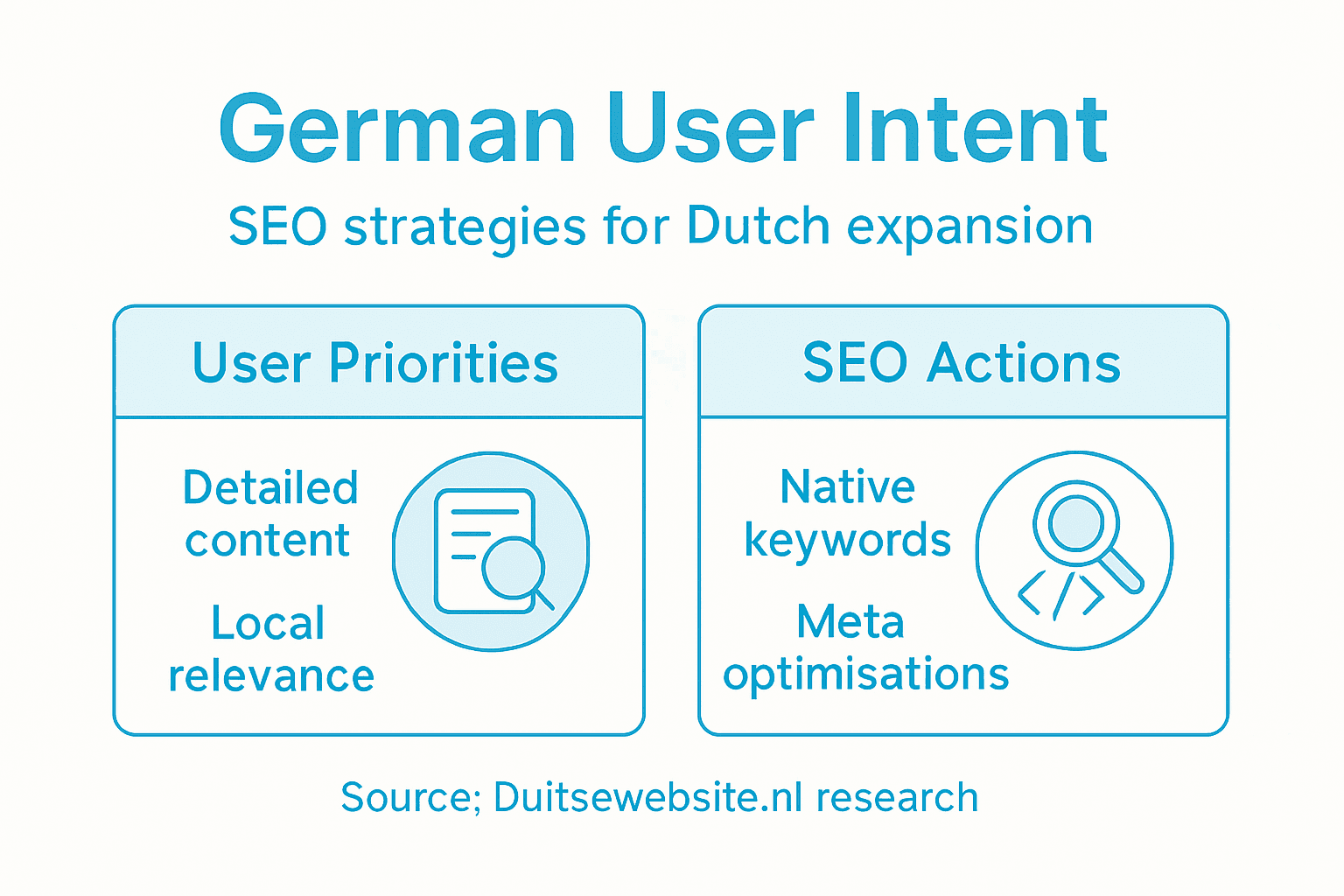
Understanding regional search intent requires more than literal translation. Dutch businesses must reimagine their content through a German linguistic and cultural lens, considering how search queries, information consumption patterns, and user expectations differ between the two markets. This approach involves researching German-specific keyword variations, understanding local industry terminology, and crafting content that resonates authentically with German professional and consumer audiences.
Pro tip: Invest in native German content writers who understand both linguistic nuances and industry-specific communication standards to ensure genuine localisation.
Legal, Compliance, and Marketplace Risks
Expanding into the German digital marketplace requires Dutch businesses to navigate a complex landscape of legal and regulatory challenges. International SEO strategies must be carefully designed to ensure compliance with stringent European Union data protection and digital marketing regulations.
International legal compliance encompasses several critical dimensions:
- Data privacy regulations (GDPR)
- Intellectual property protections
- Consumer protection laws
- Digital advertising standards
- Cross-border commercial restrictions
- Platform-specific marketplace rules
The German digital marketplace demands rigorous adherence to consumer protection standards. This means developing transparent marketing practices, ensuring accurate product representations, and maintaining comprehensive documentation that meets both Dutch and German legal requirements. Businesses must be prepared to provide detailed disclaimers, clear terms of service, and easily accessible customer support mechanisms.
Technical compliance extends beyond traditional legal frameworks. Dutch companies must implement robust data protection measures, including secure data handling processes, explicit user consent mechanisms, and transparent privacy policies that meet the exacting standards of German regulatory bodies. Understanding the nuanced differences between Dutch and German legal interpretations becomes crucial for maintaining marketplace credibility and avoiding potential legal complications.
Pro tip: Consult with bilingual legal experts specialising in EU digital commerce to develop a comprehensive compliance strategy before market entry.
Unlock Your Dutch Business’s Potential in the German Market with Expert International SEO
Expanding your online presence into Germany can be challenging without a deep understanding of international SEO nuances. This article highlights the importance of native German content, precise keyword research, technical optimisation like hreflang implementation, and legal compliance—all critical areas where many Dutch businesses face obstacles. At Duitsewebsite.nl, we specialise in solving these issues by offering a personalised, full-service approach tailored specifically for Dutch companies targeting German audiences. Our 17+ years of experience, native German expertise, and comprehensive services in SEO, localisation, and digital marketing ensure your business speaks directly to German users with authority and cultural relevance.
Take control of your German market expansion now. Visit Duitsewebsite.nl to discover how our SEO for Germany services and expert content localisation can accelerate your growth. Don’t leave your success to chance—partner with us to turn complex international SEO challenges into measurable results. Get started today with a free consultation or explore our proven strategies on Duitsewebsite.nl to secure your position on Google.de and Amazon.de.
Frequently Asked Questions
How can Dutch businesses approach international SEO?
Dutch businesses can approach international SEO by focusing on content localisation, technical optimisation, and cultural considerations. This involves adapting website content to meet the specific needs and preferences of the target market, conducting regional keyword research, and ensuring compliance with local regulations.
What are the key factors for successful content localisation?
Successful content localisation requires precision in language, cultural relevance, matching search query vocabulary, and adapting tone. It is essential to understand user expectations and provide detailed, authoritative content that addresses specific interests of the target audience.
Why is technical SEO important for expanding into new markets?
Technical SEO is vital as it ensures that search engines can effectively crawl and index a website. This includes using hreflang tags for language targeting, optimising website speed, and ensuring mobile responsiveness, which are critical factors for ranking well in international markets.
What legal compliance issues should businesses consider when expanding internationally?
Businesses must consider various legal compliance issues, including data privacy regulations, consumer protection laws, and digital advertising standards. Developing transparent marketing practices and secure data handling processes is crucial to maintain compliance and build trust with users.